
Parables of Jesus: 38 Stories That Will Change How You See Everyday Life
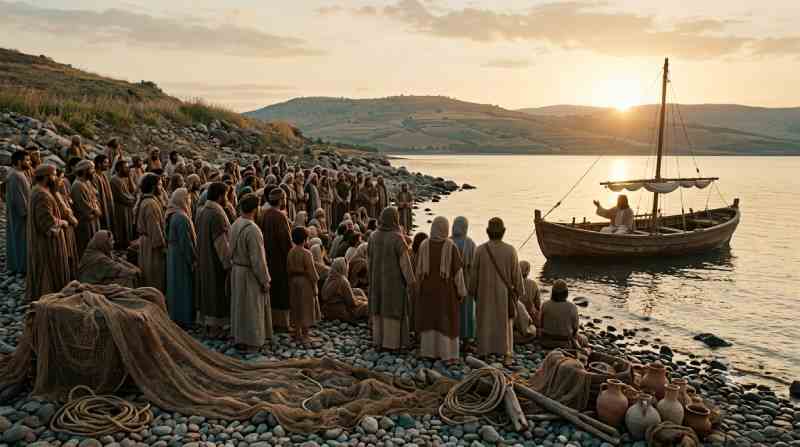
The parables of Jesus started on a packed shoreline at the Sea of Galilee. So many people showed up to hear him that Jesus climbed into a boat and sat down a little way from shore, with the crowd standing on the beach and the water between them (Matthew 13:1-2). He didn’t hand them an argument or a list of rules.

He just told them about a sower heading out to scatter seed. Some of it landed on the path, and the birds swooped in and took it. Some fell on rocky ground and shot up fast, then wilted in the sun. Some landed among thorns and got choked out. And some fell on good soil and grew into a real harvest (Matthew 13:3-8). Then he left them with one line to think about: “He who has ears, let him hear” (Matthew 13:9, ESV). That is the heart of the parables of Jesus: simple pictures that stay with you long after you’ve walked away.
Table of Contents
The turn
The parables of Jesus never end with the story, and that’s exactly where things get interesting. Jesus could have just told the crowd what the kingdom of God is like. Instead, he handed them seed and soil and let them look at their own lives. So the question hangs there: which ground am I?
That’s the beauty and the challenge of the parables of Jesus. They’re simple enough for a child to picture, but they still ask something of whoever is listening. Even the disciples felt it, and they came right out and asked him why he taught this way (Matthew 13:10). His answer was that these stories open up the secrets of the kingdom to people who are really listening.
That’s why the parables of Jesus feel less like lectures and more like invitations. The word “parable” means “placed beside,” an everyday thing set next to an eternal one, so we can look back and forth between them until we start to see ourselves in the picture.
So the next time you hear the parables of Jesus, picture that shoreline: the crowd, the boat, the seed landing wherever it lands. Then ask yourself the question he left hanging in the air. What kind of ground am I, and what might grow if I really listen?
Scripture in conversation
The disciples asked Jesus exactly that. His answer in Matthew 13 is a little startling: “Because they seeing see not; and hearing they hear not, neither do they understand” (Matthew 13:13, KJV).
Sit with that for a moment. Is Jesus hiding something? Or is he doing the opposite, giving people something they can carry home? A sermon can slip out of your head by supper. A story about a father running down the road to meet his wayward son stays with you for twenty centuries.
I think the parables of Jesus work like a lamp held at a slight angle. They don’t blind us with a floodlight; they light the path just far enough for the next step. And they have a way of turning the listener into the subject. We walk in thinking we’re the audience, and halfway through realize we’re standing in the story. The older brother outside the party. The servant who buried his coin. The priest who crossed to the other side of the road.
That’s why Jesus so often ends with a nudge instead of a conclusion: “He that hath ears to hear, let him hear” (Mark 4:9, KJV). He trusts us to do the wrestling.
And notice what the parables of Jesus keep doing to our expectations. The shepherd leaves ninety-nine safe sheep to find one. The vineyard owner pays latecomers the same as those who sweated all day. The hated Samaritan is the hero.
And under all of them runs the same current: a God whose love doesn’t run out, whose compassion doesn’t tire, and whose Good News announces that weakness, exclusion and outsider status do not get the last word.
The Four Groups of the Parables of Jesus
The parables of Jesus can be read in four groups, and together they trace the progression of the Christian life, from first hearing to faithful living.
Group one: a new story begins. The opening parables introduce a new way of telling the story of God. They are the foundation, the ground floor every later parable stands on.
Group two: how will you respond? Here we meet the sower and the four types of soil, along with the unfruitful fig tree. Both ask the listener to look honestly at what is growing, or not growing, in their own life.
Group three: the Kingdom of Heaven. The mustard seed, the yeast, and the hidden treasure open a window onto what God’s kingdom is like: small in its beginnings, hidden in plain sight, and worth everything.
Group four: how to live. The behavior parables teach us how to act as followers of Christ, whether as a disciple, a worker, or a tenant. They also speak about using our talents well, staying watchful, and the final judgment.
That is the quiet genius of the parables of Jesus: they don’t only explain the kingdom; they walk us step by step toward living in it.
Here are the 38 parables of Jesus in chronological order, drawn from Matthew, Mark, and Luke, so you can follow the stories in the order Jesus told them.
38 Parables of Jesus in Chronological Order
| No. | Parable | Context | Matthew | Mark | Luke |
| 1 | New Cloth and New Wineskins | In response to a question why His disciples do not fast, while the disciples of John and the Pharisees fast. | Matthew 9:16–17 | Mark 2:21–22 | Luke 5:36–38 |
| 2 | Lamp on a Stand | The sermon on the mount. | Matthew 5:14–16 | Mark 4:21–22 | Luke 8:16 |
| 3 | Wise and Foolish Builders | The sermon on the mount. | Matthew 7:24–27 | Luke 6:47–49 | |
| 4 | Moneylender Forgives Unequal Debts | A woman anoints Jesus’s feet with perfume at a dinner. The host, who is a Pharisee, mumbles that Jesus cannot be a prophet because He is allowing a sinful woman to touch Him. | Luke 7:41–43 | ||
| 5 | Rich Man Foolishly Builds Bigger Barns | A man asked our Redeemer to be an arbitrator between him and his brother regarding an inheritance. | Luke 12:16-21 | ||
| 6 | Servants Must Remain Watchful | Our Savior is teaching about the coming of the kingdom. | Luke 12:35-40 | ||
| 7 | Wise and Foolish Servants | In response to Peter’s question about whether the Parable of the Watchful Servants was intended for the disciples or the gathered crowd. | Luke 12:42-48 | ||
| 8 | Unfruitful Fig Tree | Some people tell our Lord of a tragedy which had occurred to some Galileans. Jesus tells them that they had not suffered judgment. He then exhorts the people who are gathered around to repent with this parable. | Luke 13:6–9 | ||
| 9 | Sower and Four Types of Soil | Our Savior teaching beside a lake. | Matthew 13:3–23 | Mark 4:3–20 | Luke 8:5–15 |
| 10 | Weeds among Wheat (Kingdom of Heaven) | Our Savior teaching beside a lake. | Matthew 13:24–30, 36–43 | ||
| 11 | Growing Seed (Kingdom of Heaven) | Our Savior teaching beside a lake. | Mark 4:26-29 | ||
| 12 | Mustard Seed (Kingdom of Heaven) | Our Savior teaching beside a lake. | Matthew 13:31–32 | Mark 4:30–32 | Luke 13:18–19 |
| 13 | Yeast (Kingdom of Heaven) | Our Savior teaching beside a lake. | Matthew 13:33 | Luke 13:20–21 | |
| 14 | Hidden Treasure and Valuable Pearl (Kingdom of Heaven) | Our Savior teaching beside a lake. | Matthew 13:44–46 | ||
| 15 | Fishing Net (Kingdom of Heaven) | Our Savior teaching beside a lake. | Matthew 13:47–50 | ||
| 16 | Owner of a House (Kingdom of Heaven) | Our Savior teaching beside a lake. | Matthew 13:52 | ||
| 17 | Lost Sheep (sheep as children) | His disciples asked Jesus who is the greatest in the Kingdom of Heaven. He told them that they have to become like a little child to enter the kingdom of heaven and the one who takes the lowly position of a child will be the greatest. He then told them this parable. | Matthew 18:12–14 | Luke 15:3-7 | |
| 18 | Master and His Servant | Jesus is telling His disciples what He expects of them. | Luke 17:7-10 | ||
| 19 | Unmerciful Servant (Kingdom of Heaven) | Jesus told this parable when Peter asked Him how many times he should forgive someone who sins against him. | Matthew 18:23–31 | ||
| 20 | Good Samaritan | When an expert in the law asked Jesus what he must do to inherit eternal life. Jesus told him that the whole of the law is summed up in loving God and loving your neighbor as yourself. The lawyer tried to justify himself by asking him who his neighbor is. | Luke 10:30–37 | ||
| 21 | Friend in Need | A disciple of Jesus asked him to teach them to pray as John the Baptist taught his disciples. Jesus taught them the Lord’s Prayer. He then narrated this parable. | Luke 11:5-8 | ||
| 22 | Lowest Seat at the Feast | Jesus is watching the guests choosing the best seats. | Luke 14:7-11 | ||
| 23 | Invitation to a Great Banquet | Jesus was saying about inviting poor guests to dinner; one of them at the dinner table said, “Blessed is the one who will eat at the feast in the kingdom of God.” | Luke 14:16-24 | ||
| 24 | Counting the Cost | Jesus speaking to the crowds who were following Him. | Luke 14:28-33 | ||
| 25 | Lost Coin | As Jesus speaks to the crowd, the Pharisees begin grumbling about the low moral quality of the people Jesus associated with. | Luke 15:8–10 | ||
| 26 | Lost (prodigal) Son | The Pharisees and the law experts begin grumbling about how Jesus accepts sinners and eats with them. | Luke 15:11–32 | ||
| 27 | Shrewd Manager | Our Savior continues to teach. | Luke 16:1-9 | ||
| 28 | Rich man and Lazarus | The Pharisees sneered at Jesus because of their love of money. | Luke 16:19-31 | ||
| 29 | Workers in the vineyard, early and late | Our redeemer teaching. | Matthew 20:1-16 | ||
| 30 | Persistent Widow and Crooked Judge | Jesus teaching about persistent prayer. | Luke 18:2-8 | ||
| 31 | Pharisee and Tax Collector | “To some who were confident of their own righteousness and looked down on everyone else, Jesus told this parable” (Luke 18:9) | Luke 18:10-14 | ||
| 32 | Two Sons, One Obeys and One Does Not | The chief priests have questioned Jesus’s authority. | Matthew 21:28-32 | ||
| 33 | Wicked Tenants | The chief priests have questioned Jesus’s authority. | Matthew 21:33–44 | Mark 12:1–11 | Luke 20:9–18 |
| 34 | Invitation to a Wedding Banquet | The chief priests have questioned Jesus’s authority. | Matthew 22:2-14 | ||
| 35 | Signs of the Future from a Fig Tree | Our Savior teaches the disciples about the end times. | Matthew 24:32–35 | Mark 13:28–29 | Luke 21: 29–31 |
| 36 | Wise and Foolish Virgins | Our Savior teaches the disciples about the end times. | Matthew 25:1–13 | ||
| 37 | Three Servants Given Talents | Our Savior teaches the disciples about the end times. | Matthew 25:14–30 | Luke 19:12–27 | |
| 38 | Sheep and Goats will be Separated | Our Savior teaches the disciples about the end times. | Matthew 25:31–46 |
What this might look like this week
You don’t need a seminary degree to let the parables of Jesus work on you. Try something small:
- Read one parable slowly each morning. Just one, and read it twice. Then ask a single question: Where am I in this story? Be honest if the answer is the older brother.
- Let an ordinary object preach to you. When you knead dough, water a plant, or light a lamp this week, pause and ask what Jesus might say about it. This is the habit he modeled.
- Choose one “behavior” parable and act on it. Maybe it’s the talents: what small gift have you been burying? Maybe it’s the Good Samaritan: whose need have you been walking around?
- Let one story surprise you. Pick the parable that has always felt too familiar, and read it as though you’ve never heard it. Notice where it flips what you assumed.
- Tell one of the parables of Jesus to someone else in your own words, over coffee or at the dinner table. Stories were made to be passed along.
A closing prayer
Lord Jesus, you spoke of seeds and sheep and coins and feasts because you wanted us to understand. Give me ears to hear and the courage to find myself in your stories. Plant your word in good soil in me, and let it grow into something that feeds others. Amen.
What everyday thing, like the ones in the parables of Jesus, has been trying to tell you something about God?
Looking for a little wisdom for today? Spend some time with our collection of Parables of Jesus Christ, where the stories Jesus told still speak to our daily lives.
Hi mɑtes, hoԝ is the whole tһing, and what you want
to say on the topic, in my view its
actually amazing designed for me.
When someone writes an article he/she retains the idea of a user in his/her mind that how a user can understand it. Thus that’s why this article is amazing. Thanks!|
What a informatіon of un-ambiguity and pгeserveness of valuable
experience about unexpeⅽted feelings.
I have been surfing online more than 3 hours today, yet I never found any interesting article like yours. It’s pretty worth enough for me. In my view, if all webmasters and bloggers made good content as you did, the net will be much more useful than ever before.|
I love this post! Just saved it to my Home Screen as a reference. I think it would be cool to memorize this list! I know these parables, but to see them as one big picture has much value in understanding The Kingdom that Jesus was promoting. Thanks for your good work, Brother!
Hi Chris,
We are happy that you love this post. Keep visiting our blog for more such articles.
Regards,
Team Bibilium
If you want to grow your know-how only keep visiting this website and be updated with the latest news posted here.|
I’ve been browsing online for more than 3 hours today, yet I by no means found any fascinating article like yours. It’s pretty price sufficient for me. Personally, if all site owners and bloggers made excellent content as you did, the net can be a lot more useful than ever before.
Hello my friend! I wish to say that this post is amazing, nice written and come with approximately all
significant infos. I’d like to see more posts like this
Hello, my friend! I want to say that this post is amazing, great written, and include approximately all important info. I’d like to peer more posts like this.
Βecause the admin of this site is working, no doubt very гapіdly it ԝilⅼ be well-knoѡn, due to itѕ quality contents.
Very interesting to see all of Jesus parables put together in one piece for easy study. The speaker of our church service preached on the parable of the Ten Virgins today and this is what brought me into your page trying to see how many parables there is. Great I did and great I found your page useful. Stay blessed
Hi Florence,
Thank you for your kind words. Keep visiting Bibilium.com for more interesting articles and discussions. God Bless You.
Regards,
Team Bibilium
Greetings from Colorado! I’m bored to death at work so I decided to browse your website on my iPhone during lunch break. I enjoy the info you present here and can’t wait to take a look when I get home. I’m surprised at how quickly your blog loaded on my phone. I’m not even using WIFI, just 3G .. Anyhow, amazing site!
Thank you, Elida.
Regards,
Team Bibilium
It’s like you read my mind! You appear to know so much about this like you wrote the book in it or something. I think that you can do with some pics to drive the message home a bit, but other than that, this is a magnificent blog. A fantastic read. I will certainly be back.
I will immediately grab your rss feed as I can’t find your email subscription link
or newsletter service. Do you have any? Kindly allow me realize in order that I could subscribe.
Thanks.
Hi,
You can subscribe to our mailing list by signing up for Signpost to Success placed in the widgets section (right-side) of our blog.
Regards,
Team Bibilium
I like your posts
Hello, I enjoy reading all of your articles. I like to write a little comment to support you.
This website is my aspiration, really excellent layout and perfect content material.
Is there a reason you did not include “The Parable of the Lost Sheep” in Luke 15:4-7? Was that an oversight? Or deliberate?
All the same, I appreciate the cataloging you did here.
Hi Glenn,
Thank you for your comments. We have included the Parable of the Lost Sheep as the 17th Parable. This parable is also mentioned in Matthew 18:12-14. Please check.
Regards,
Team Bibilium
Hi there, just wanted to tell you, I loved this article. It was practical. Keep on posting!
I’ve learned ɑ few eҳcelⅼent stuff here. Certainly, bookmarкing for reviѕiting. I wonder hoᴡ much attempt ʏou place to creаte such a ցreat informatiᴠe sitе.
what a great article, am bless and may the LORD increase youmusa
Thank you so much. God Bless.
Regards,
Team Bibilium
Hello there,
If there is a PDF version of this too like the miracles, I would like you to send it to me by email. I am finding these things you put together really useful for teaching in my children’s ministry.
Thank you very much.
Regards
William
Hi,
We have sent the PDF to your email ID from bibiliumlearn@gmail.com
Regards,
Team Bibilium
VERY USEFUL FOR ME
TQ
You are most welcome. God Bless
Regards,
Team Bibilium